
Documentation
Hardware specifications, bus protocols, and development guides by Zlucent
Quick Links
OmniPy STM32F429 MicroPython Platform
The OmniPy Board runs MicroPython on an STM32F429 microcontroller with Wi-Fi connectivity. It supports user-downloadable scripts running from volatile RAM (for rapid snippet prototyping) or persistent Flash (for auto-execution on power-on). Control I2C, SPI, UART, GPIO, RS-485, and relays wire-free.
For comprehensive hardware pinouts, FLIR Lepton camera integration, STLink/JTAG programming, and QEMU Android Emulator setup with remote GDB TCP debugging, visit our dedicated product specification portal:
Zlylian Board — FTDI FT4232 USB-C Multi-Protocol Bridge
The Zlylian Board is an industrial-grade hardware bridge and JTAG debugger engineered around the FTDI FT4232 high-speed USB controller chip. It connects PC, Linux, and macOS workstations directly to embedded target microcontrollers, flash memories, sensors, and serial devices over modern USB 3.0 Type-C.
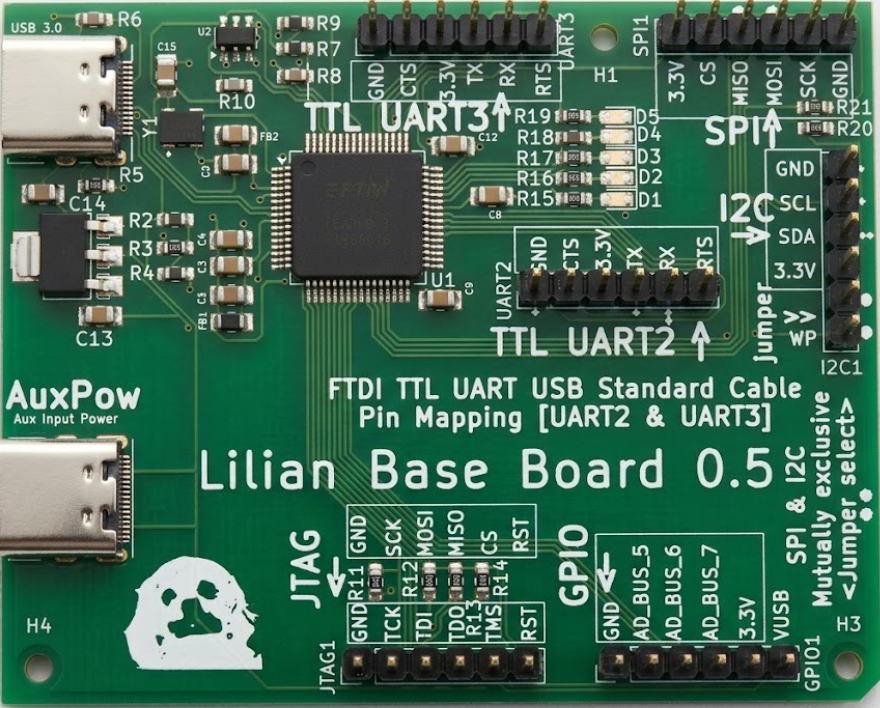
Key Hardware Specs
- Controller IC: FTDI FT4232 (FT4232HL) 4-channel High-Speed USB.
- Host Connector: Modern USB 3.0 Type-C port.
- Auxiliary Power: AuxPow USB-C port for external target power injection.
- Pin Spacing: Standard 2.54mm (0.1″) header pitch throughout.
- Silk Markings: Every signal name and pin label printed directly on PCB.
- Platform: Pure PC / Workstation hardware tool (no mobile/Android requirement).
Hardware & Pinout Overview
The Zlylian Board breaks out all four independent FTDI channels with standard 2.54mm pitch headers. The silk-screen marking clearly indicates pin assignments so you never need to consult pinout sheets:
| Header Name | Pin Signals (2.54mm Pitch) | Description |
|---|---|---|
| TTL UART3 | GND · CTS · 3.3V · TX · RX · RTS |
FTDI TTL UART USB standard cable pin compatible |
| TTL UART2 | GND · CTS · 3.3V · TX · RX · RTS |
Second independent serial console channel |
| SPI Header | 3.3V · CS · MISO · MOSI · SCK · GND |
High-speed SPI Master (mutually exclusive with I2C via Jumper) |
| I2C Header | GND · SCL · SDA · 3.3V · WP |
I2C Master bus (mutually exclusive with SPI via Jumper) |
| JTAG Header | GND · TCK/SCK · TDI/MOSI · TDO/MISO · TMS/CS · RST |
In-circuit debugging, boundary scan, OpenOCD |
| GPIO Header | GND · AD_BUS_5 · AD_BUS_6 · AD_BUS_7 · 3.3V · VUSB |
Digital I/O control and power breakout pins |
Supported Protocols & Jumper Configuration
The board features an onboard selector marked SPI & I2C Mutually exclusive <Jumper select>. Place the 2.54mm shorting jumper in the designated position to route channel signals to either the SPI header or the I2C header. JTAG and Dual UART TTL remain active simultaneously.
Workstation Tools & Python Scripting
Because Zlylian uses the standard FTDI FT4232 chipset, no proprietary drivers are necessary. On Linux, macOS, and Windows, you can access the board using pyftdi, pyserial, or OpenOCD.
# Example: Read I2C sensor via Zlylian FT4232 using pyftdi on PC
from pyftdi.i2c import I2cController

i2c = I2cController()
# Connect to Zlylian Board via USB-C
i2c.configure('ftdi://ftdi:4232/1')

# Query I2C slave sensor at address 0x48 (e.g., LM75 temperature)
port = i2c.get_port(0x48)
raw = port.read_from(0x00, 2)
temp_c = ((raw[0] << 8) | raw[1]) / 256.0
print(f"Sensor Temperature: {temp_c:.2f} °C")
PIC32MX495 Open-Source Multi-I/O & 12-Bit ADC/DAC Board
Our inaugural hardware platform is built around the Microchip PIC32MX495 32-bit MCU with USB 2.0 Full-Speed connectivity. Designed as a 100% open-source product, it gives developers full access to the hardware schematic, onboard PIC32 firmware, cross-platform PC application, and a dedicated supporting Android application.
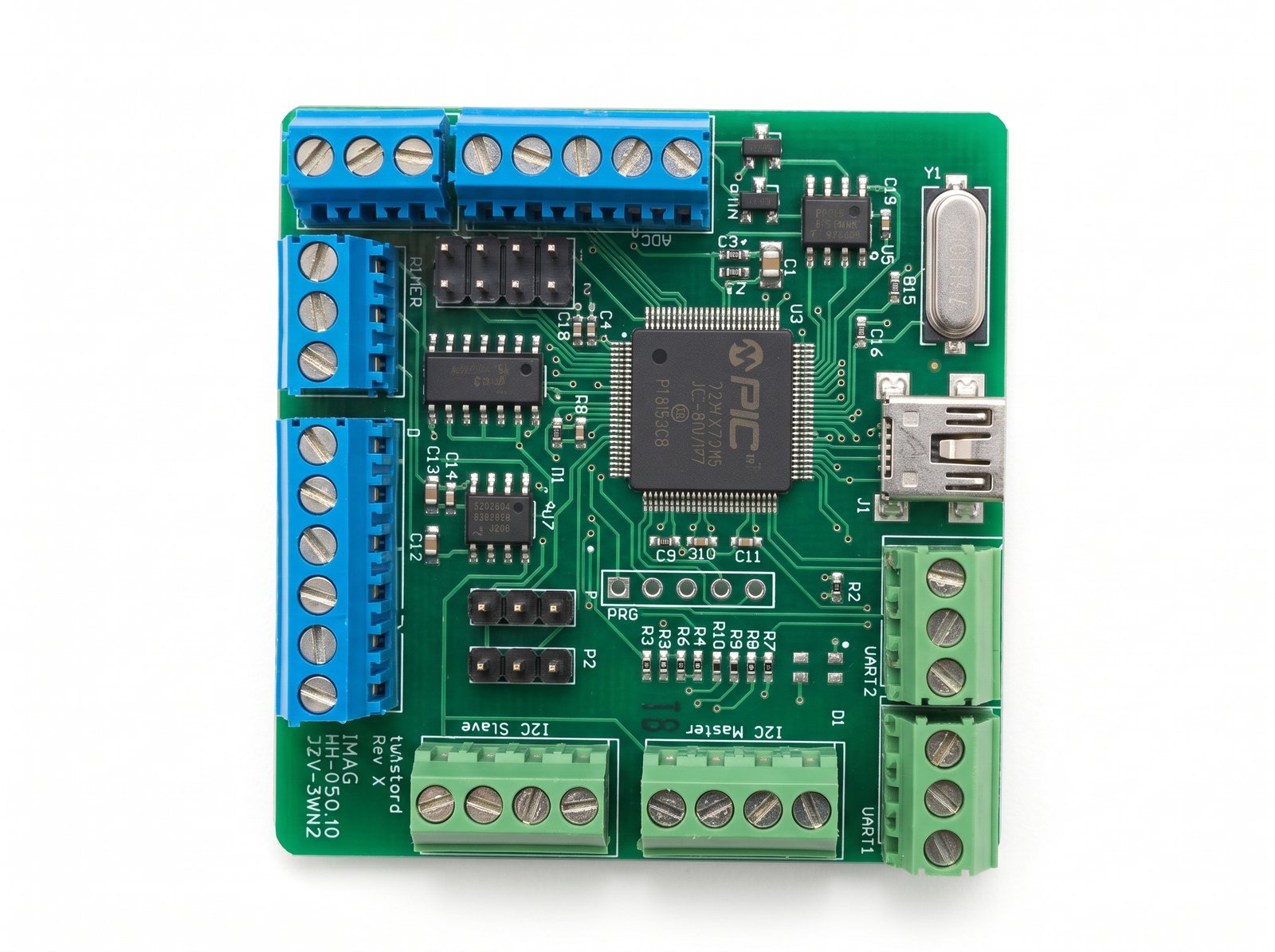
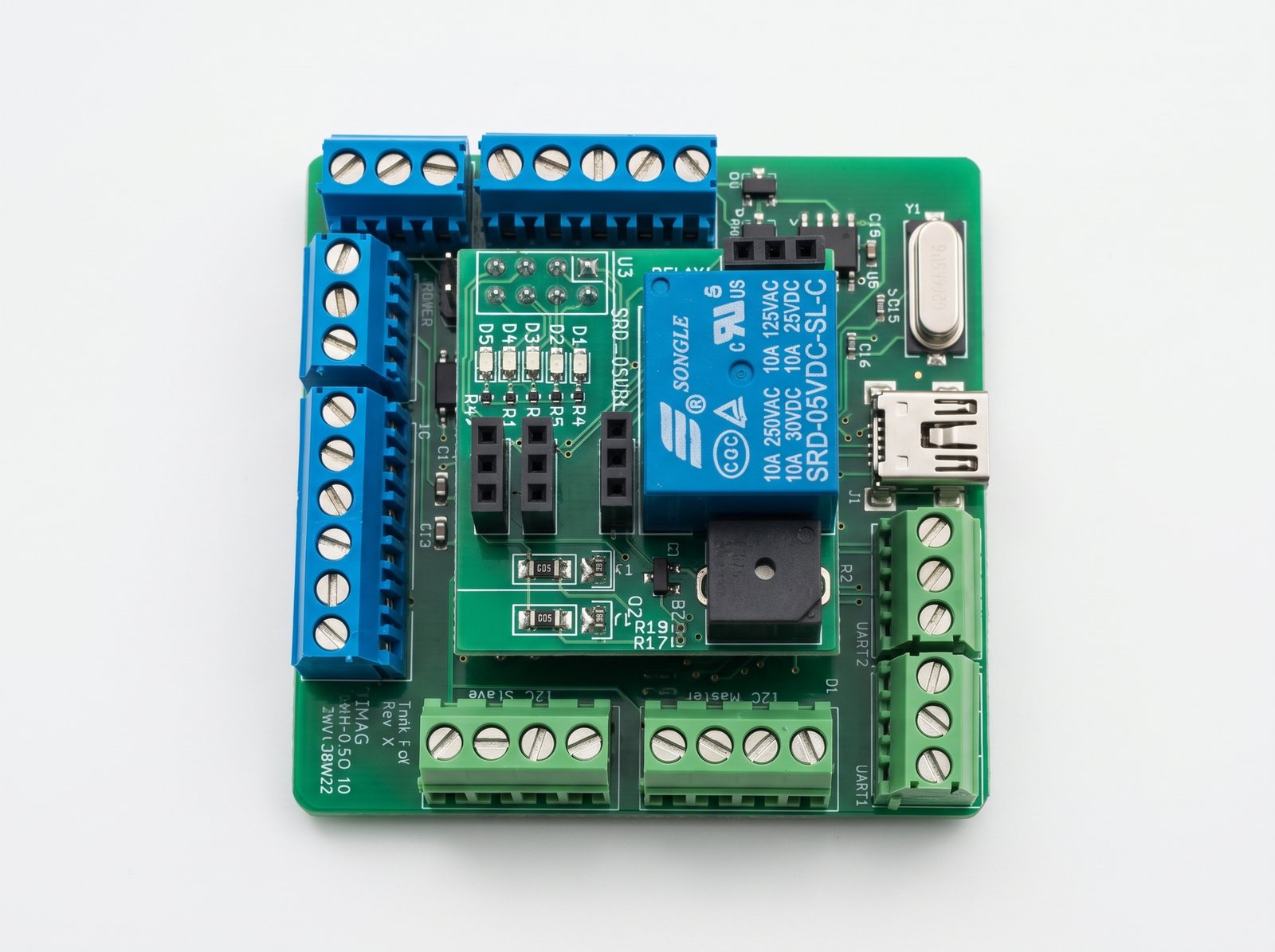
- Analog Precision: 12-Bit Dual-Channel External ADC & 12-Bit Dual-Channel External DAC.
- Serial & Digital Buses: TTL UART (
UART1&UART2), Dual I2C Master channels, and GPIO terminal blocks. - Open-Source & Mobile Ready: Complete schematic, firmware, cross-platform desktop app, and supporting Android app.
- Limited First-Edition Availability (Main Board $79.00 · Extension Board $19.00): Produced in small quantity as Zlucent’s first product—available on a first-come, first-served basis.
- Learning material: labs, slides, annotated pinouts and a write-your-own-sensor-library guide in the PIC32 Learning Hub.